In an earlier article, I wrote how travelling can be a materialistic goal just as much as owning an expensive car or painting. In this one, I’ll show you how owning expensive cars can also be a non-materialistic experience.
Skills are your personal progress levels
As life is a competition, and how well you do in it is the source of most fulfilment and satisfaction feelings, it makes sense that improving your skills, and thus making it easier for you to compete at a higher level, leads to fulfillment and satisfaction.
Humans enjoy a highly varied set of skills, from sports, to sales, to relationships. You can find people with all sorts of wild skills.
The problem most people have from achieving their goal is 2 fold:
- Not focusing on the correct skill
Many people make the mistake of either doing a skill they do not enjoy or was forced on to them, or they do not allocate at least some time and energy on skills that help them towards the goals they have set.
For example, one of the biggest skills that many people have not improved enough is communication. There are many sub-skills of communication, but the world is filled with examples of bad communication skills. Just take any post, video, news article, reddit, sales meeting, relationship, manager-employee and so on. It’s full of misunderstandings, it is non-cooperative, and it does not lead to positive outcomes for all parties.
There is a reason for communication being such an in-demand skill when it comes to sales. It is why someone who is good at communication, can often earn significantly more in sales or management than doing the “tough” work behind the scenes as a specialist.
And what if you hate sales or people management or another important skill?
That is fair enough, you can focus your attention to other high value skills. Just make sure that the reason you dislike a skill is because you actually dislike it rather than because you are not yet good enough at it.
There is often a steep learning curve for many skills, full of frustrations. Recognise the difference between disliking a skill, and disliking the pain required to progress. If you do not like a skill, then find another path to your goal. But if you do not like the pain required to progress, then you need a mentality shift to use the pain to fuel your motivation rather than discourage you.
You also need to accept the limitations of not developing certain skills. For example, you may get away with not having the best communication skills at work and still be financially well off, but you will rarely get the relationship you want if you do not learn the sub-skills required for healthy communication between partners.
- Not developing skills at all
Some people complete school or university and essentially pause all their learning. They may learn a few odd bits but no dedicated time on improving skills. This is how you become stale, unfulfilled, and bored at life.
The last one is crucial, because people make the worst mistakes when they are bored. Addictions, chasing highs, short-term pleasures and all kinds of negative actions spur from boredom. If this lingers for a while, then these negative actions turn into negative habits which in turn makes it even harder to get out of the hole you dug yourself into.
Some people, often who were born into more well off families may get a way with the skills they developed during their childhood. These are the kids who can communicate very well straight away, or investing into houses is piece of cake for them.
This is a double edged sword – it’s good because they can reach their goals easier and quicker. But it can also be bad because having access to most materialistic experiences or pleasure too easily will not build that resilience and dedication required to keep going. So it can lead to boredom too quickly and all the negative aspects with that as described.
So how do you prioritise which skills to develop?
I like to split skills into 2 groups. Primary and secondary.
You want to be developing 1 primary skill and at least 1 secondary skill at all times. The difference between the two is that a primary skill is a skill that will help you get the life you want to live.
The secondary skill is one which will give you pleasure in the short term – A sport, a hobby. The important thing is that it must have an easy to track progress curve.
Why do you need both? At times, we will have to take a step back in our primary skill. Things will go wrong, or get delayed. When that happens, you need to have a secondary skill which you are progressing in to keep you sane and motivated. To say to yourself – “Yes I’ve slowed down temporarily, but at least I’m still improving X”.
This mentality keeps you from getting into negative habits or downward spirals.
What should my primary skill focus be?
This depends on where you are in life and what you want to achieve next.
If it is something that requires finances, then figure out a skill which you like the grind and is highly employable. Sales, marketing, coding, medicine, law, engineering, project management, entrepreneurship, logistics. Whatever it is you pick must be scalable – it must be able to quickly grow you into a position where you can earn significant amount of money to afford the life you desire.
If it is relationship, friends or family orientated then your primary goal must be in communications. As mentioned, there are many sub-skills within this to list but you need to have the self-awareness to identify your weak areas and improve them. If you can’t identify them, get money and pay a coach that can.
Link skills back to what you want out of life
If you enjoy a job that is not normally considered highly paid but you enjoy it, then you still need to learn one of the above primary skills. For example, say you want to be hairdresser. To massive increase your earning potential you need
- Continuously improving your hair dressing skill by learning from those at 1-2 levels above you.
- Learning a primary skill such as marketing so that you can market your services to high-end clients who will pay you significantly more for less work.
At the start of this article, I wrote that travelling can be materialistic. It is taking pleasure from life and there is nothing wrong in that. But some people travel for pleasure while also developing primary skills – say communication via practicing languages, speaking with other cultures, actually focusing on developing deep connections with people. If you are purely travelling to see tourist attractions, go to a few parties and meet a few people without any specific direction, then you are purely focusing on pleasure.
There is nothing wrong with pleasure taking as long as it is known and does not impact your long-term focus on improving your skills. This is why you should not judge someone who spends their pleasure on say purchasing expensive cars or watches rather than travelling. Some people just derive more pleasure from it.
Others actually use their purchases to improve their primary skills as well. For example, a fan of luxury brand watches can become good at investing in them. So they buy things they like because they understand their value and rarity, and then sell at appropriate times to make financial gains. Similar thing with cars and other high-value pleasures.
Forming habits is the long-term strategy to improving skills
The problem with developing skills is that they take time. Lots of time. We’ve all heard it takes 10,000 hours to master a skill. If you can only spend 2 hours a day on a skill, it will take you 5000 days or over 13 years to master it.
Luckily, for most skills, we are already pretty good at them. Most people already have average communication skills which they have spent their whole life learning. But average is not good enough in this world. You need to up your game and get to be the top 1%. For that you need identify your weak areas, find experts in that area and use their guidance to improve.
You will only have the motivation to do this if you consistently allocate x hours every day/week on that skill. Do it consistently for 60-90 days and you will form positive habits that then become routine and easy to accomplish.
Your whole life is based on habits and they are either positive or negative
Most humans have similar routines every day. Even if you have a varied life, you tend to have a routine varied life. I.e. the routine at how you deal with variety is similar.
Routine is necessary for the humans. We are not good at multitasking or forever chasing new things. The reason is because skills do take a long time to learn, and we get frustrated if we have to continuously start from the “I know nothing” stage.
Variety is good to get us to reflect every once in a while, but the summary is – we need habits. Positive habits.
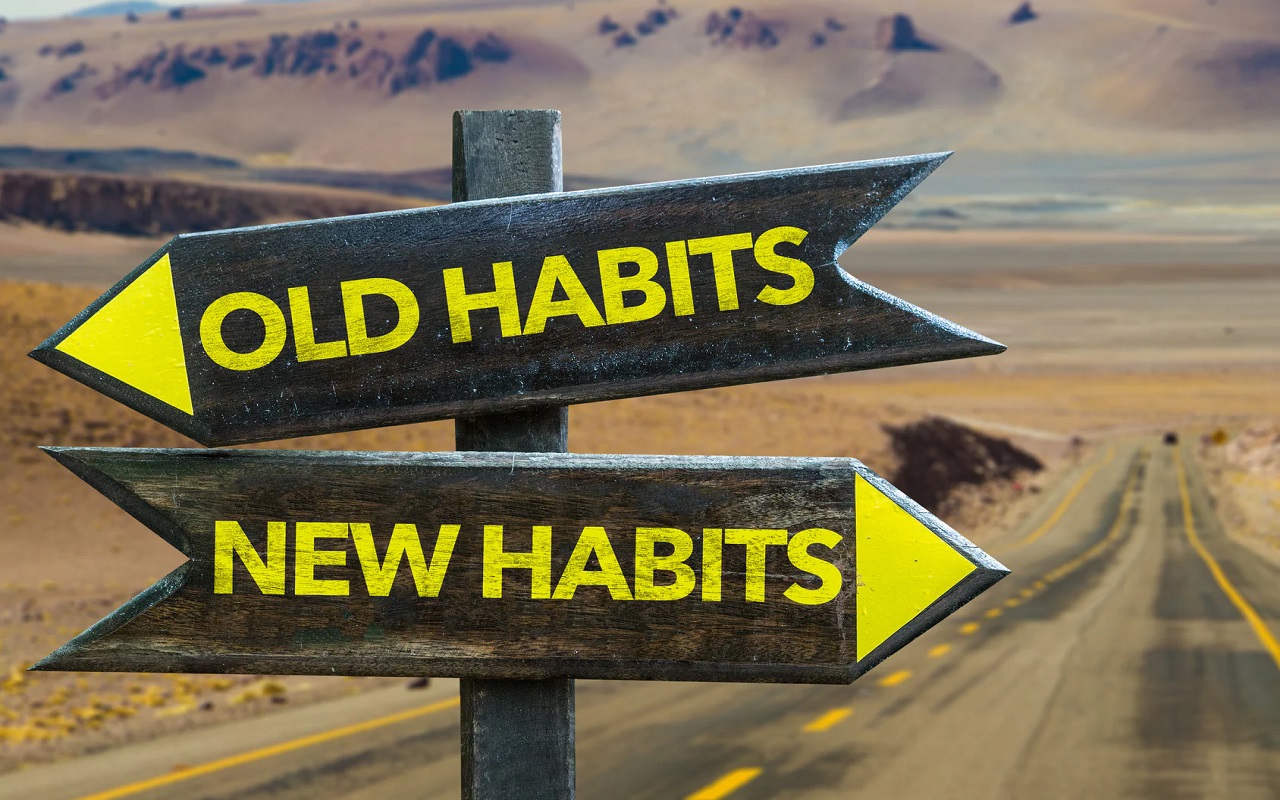
The way habits work is simple. At any point of time in your life, you have developed a set of habits, good or bad and it takes effort to replace a habit. You can never remove habits, only replace them. This is why smokers or drug addicts often need to do it in stages – first you replace the habit with a slightly less negative one, then less negative and finally into a positive one.
For most, it’s not that extreme. You identify a habit you do not like, and one you would like to get into and then use the time spent doing the negative habit to do the new one. Initially it would be hard, but the longer you stay consistent, the easier it will become.
Do not get disheartened if this process takes time or if you have a couple of bad days. Some of us have had certain negative habits for years. It will take time to replace them completely. Focus on only the next step to keep yourself determined.