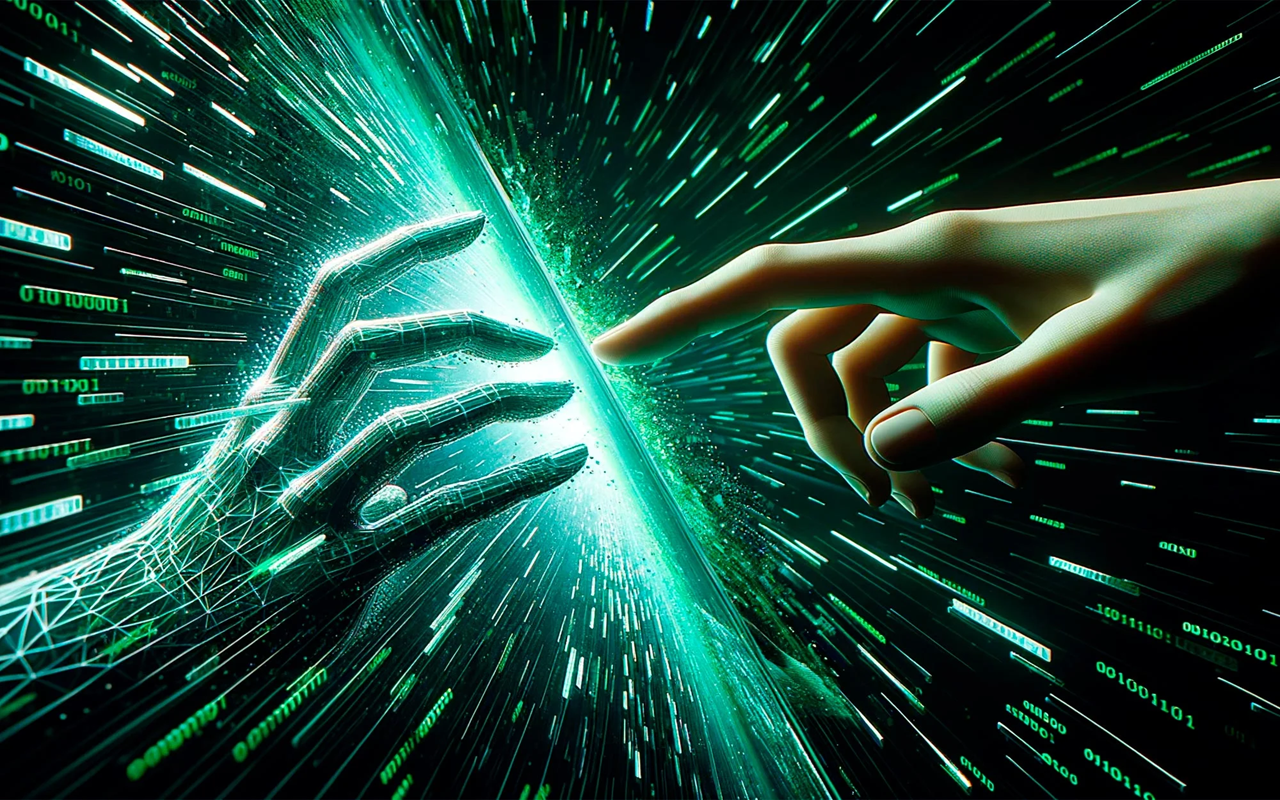
A romantic view that has withstood the test of time is the idea of soul mates. While there are many people that don’t believe in the idea of soul mates, it’s hard to completely disregard the idea given how prominent it is in our culture. You see it everywhere – in TV series, films, books, religion, horoscopes etc. One idea that has been popping in my head for the past few years though is the idea of soul mates in a mathematical sense.
If we define a soul mate as the person who is most suitable for you in the world, then actually there is at any given point of time, just 1 person in the world who is the most suitable. The people may never know it, nor ever meet but if there was a way to simulate this, it would be pretty fascinating. The idea has already been on TV with the Black Mirror episode of “Hang the DJ”. Spoiler alert incoming. The episode is about a dating simulation app which puts virtual copies of potential partners in a world and checks how well they are together for magnitude of years in seconds.
Of course, the problem with such an app, and the idea of the soul mate is that people change. We change what we want, how we feel, we grow old and so on. So, if you define a soul mate as someone who will always be the love of your life, that may not exist for everyone. But what would exist, is the person who you are most likely to stay in a “till death do us part” relationship. Or, going further, the person who you would experience the most excitement and positive feelings and have a high chance to stay together “till death do us part”.
Another interesting thing would be to know how much “better” is the most suitable person in the world for you compared to the 10th, 100th, 1000th maybe even 10,000th most suitable person? I.e., does there get a point where the difference in suitability is so small it makes little difference who you pick. With 8 billion people scattered across the globe, and how many people aren’t completely sure who is a good partner for them, it may be that there are many as near perfect matches as one can hope for, but we never get to materialise that potential.
But what if there is a big difference. What if say the chances of having a life-long, fulfilling an exciting relationship between the most suitable person, and the second most suitable person is a difference of 10%? 20%? More? Would the most suitable person then meet the criteria of being a soul mate?
Or is it not so much how much more suitable a person is, but an idea of how long throughout a person’s life that person would remain as the most suitable person. I.e. Who is the soul mate if someone would be the most suitable for someone but only if they meet while they are 20-23 years old yet some other person is less suitable in general, but because of how people’s life progress, they are the most suitable partner for if they meet during a 10-20 years period?
You might think that all this is irrelevant or even being an unromantic way of thinking about soulmates but there is a reason for all this. Relationships will continue to evolve as technology advances further and further into virtual realities, artificial intelligence becoming smarter, and computational power continuing to increase to allow for even wilder applications.
What happens if the app from the Black Mirror episode becomes a possibility? What metrics of success do you use to program the algorithm, and is it even a good idea to know who your soul mate is? What happens if a single person is the most suitable for thousands of potential partners?
Would an app telling you who your soul mate is ruin the magic of it or even make the relationship boring? Is part of the excitement that comes from dating the figuring out if someone is a good potential match, and thus would knowing that it is for certain not kill the essence of what makes it good? Or is the chase of the excitement what causes many toxic relationships and mismatches that don’t last?
These questions won’t be answered soon, but if humanity continues to evolve, they may be. Probably then, we will have people complaining about how easy it is and how in the past people had to actually date people to find out if they liked someone or not.